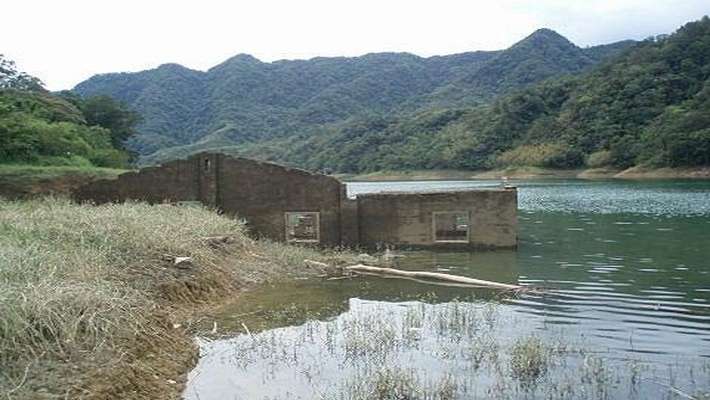
Vairamani, sometimes spelled Vairamoni, was once a sizeable and commercially important settlement in the high ranges of Idukki, Kerala. Today, much of what remained of the village lies beneath the waters of the Idukki reservoir. When the water level falls sufficiently, the ruins of its former life—building foundations, sections of roads and the remains of religious and public structures—can emerge from the reservoir.
A village before the dam
Before the Idukki hydroelectric project transformed the landscape, Vairamani was not an isolated hamlet. It served as a commercial centre for surrounding settlements, including Kuthirakuthi, Mayyanna, Kayanattupara, Venganam, Churuli, Ktavara, Muthikandam and Nadakkavayal.The settlement also occupied an important position on the route between Thodupuzha and kattappana. Roads through the forest connected the area with Kattappana, and Vairamani became a stopping point for people travelling through the high ranges. Historical accounts describe extensive agriculture in and around the settlement, including paddy cultivation. Families lived there, operated small shops and built institutions that made Vairamani a functioning village rather than simply a collection of houses. The fate of Vairamani changed with the construction of the Idukki hydroelectric project.
As the reservoir was prepared, the government acquired the land and the residents were relocated. Sources differ somewhat on the exact number of families or residents—contemporary accounts commonly describe more than 2,000 families, while a 2026 retrospective describes approximately 3,000 people. People from Vairamani and neighbouring areas were resettled in places including Vannappuram, Chalakudy, Manjapra, Koruthodu and Chelachuvad. The official history of Kanjikuzhy Grama Panchayat also records that people displaced from Vairamani and other areas by the Idukki Project were subsequently resettled in the region with land titles. The decisive moment came in 1974, when the Idukki reservoir was filled.
The water gradually covered the old settlement. Houses, shops, roads, agricultural land and other traces of everyday life disappeared beneath the reservoir. Vairamani effectively ceased to exist as a populated village.One of the most poignant reminders was St. Thomas' Church, described in reports as being more than a century old. The church was later relocated to Kulamavu and became known as St. Mary's Church.The village therefore wasn't "destroyed" by a sudden natural disaster. It was submerged as a consequence of the idukki dam project after its residents had been relocated. That distinction is important when telling the story.
The Ghost Village Emerges
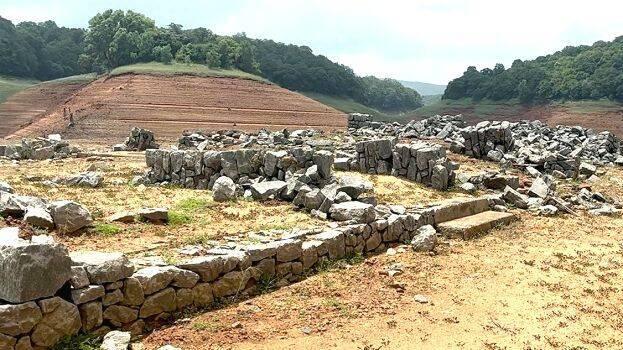
For decades, Vairamani remained hidden beneath the reservoir. But Vairamani has occasionally reappeared when the reservoir's water level becomes exceptionally low. In 2019, and again in 2023, reports described the remains becoming visible as the reservoir level fell. At around 14-15% storage, portions of the old settlement could be seen, including foundations of houses and shops, remnants of roads and the foundations of the old church and school.For people who knew the old village, these ruins are more than an unusual sight. They represent a community that once had homes, businesses, schools, religious institutions and agricultural land. Vairamani is sometimes described as a hidden, lost or submerged village because it is normally concealed beneath the Idukki reservoir. When the water rises, there is little visible evidence that a village once occupied the area. When the reservoir falls dramatically, however, the landscape changes and the remains become visible. This has created the unusual phenomenon of a village that periodically seems to return from beneath the water. Kerala news reports have documented these appearances when the reservoir level dropped substantially.
Today, when the water level falls and the old foundations emerge, Vairamani provides a physical reminder of that transformation. The village did not simply vanish. Its people moved, while the place they once called home disappeared beneath the water. That is what makes Vairamani particularly compelling as a historical story: a village can disappear from the map while its memory continues through the people who left and the ruins that occassionally rise from the reservior.
What remains today?
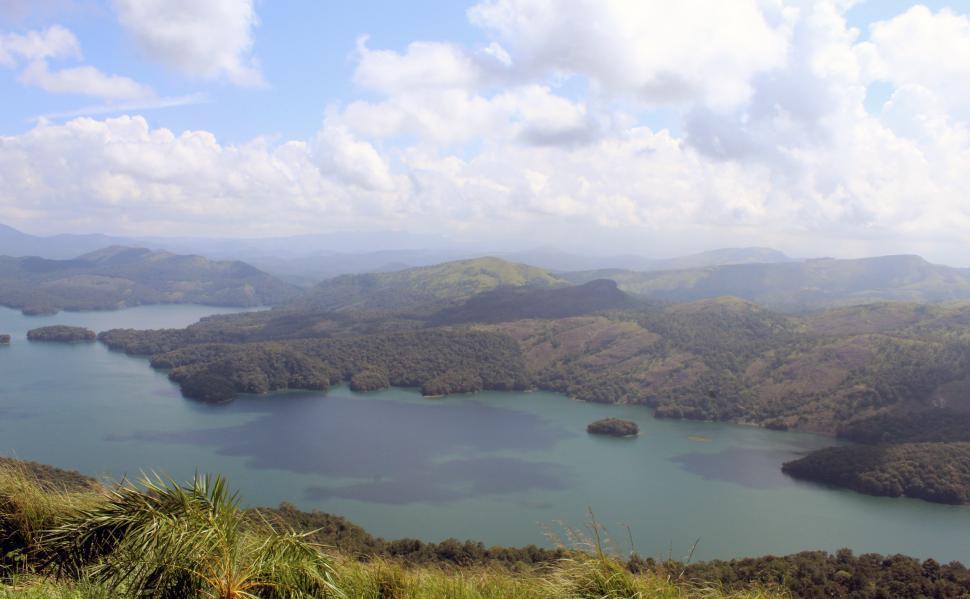
Very little of the original settlement survives above the reservoir.
Among the reported remains are:
- Foundations of houses
- Foundations of shops
- Sections of the old road
- The foundations of the old church
- Remains associated with the former school
- Stone structures and other traces of the settlement
The name Vairamani itself has also survived in the area's official records through Vairamani Forest Station. The former settlement area is now associated with the Idukki reservoir and surrounding protected forest landscape. Reports also describe the exposed land becoming useful to birds during periods when the water retreats. Vairamoni is now an islet formed in the Idukki Reservoir within the Idukki Wildlife Sanctuary. This islet, without human intervention, is being turned into a breeding ground for many birds in the summer months.Currently, to reach Vairamani, one has to travel by boat for three and a half hours from Kulamavu through the reservoir. Kulamavu Forest Station is marked as Vairamani Forest Station in the records.